
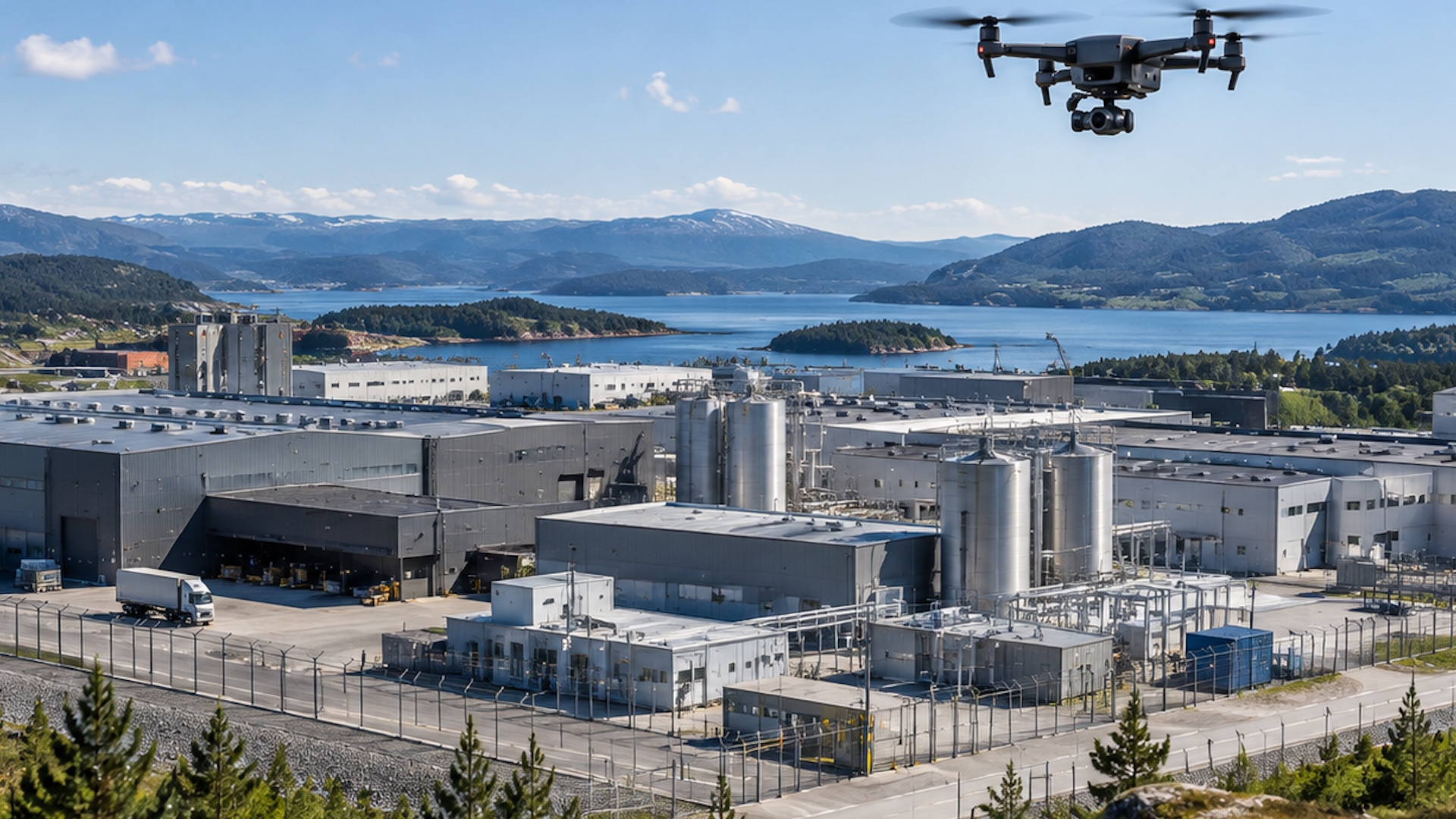
Drone Detection and airspace monitoring
Unauthorised drones represent a real and growing threat to critical infrastructure, ports and large-scale events. We supply complete systems for the detection, identification and handling of unauthorised drone activity – fixed, temporary or vehicle-mounted.
Drones are the new security challenge
Commercially available drones have become cheaper while range and payload capacity have increased dramatically – and the threat landscape has changed accordingly. Drones can be used for reconnaissance, smuggling, disruption of operations and, in extreme cases, as a weapon. For organisations responsible for critical infrastructure, large sites or high-value assets, airspace monitoring is no longer a niche product – it is a necessary part of a comprehensive security picture. Solid Sikring delivers systems for the detection and management of unauthorised drone activity, adapted to the specific threat level and regulatory requirements of each site.
What does drone detection actually solve?
The most important question for most organisations is not whether they need jammers or counter-drones – it is far simpler: Do we know what is happening in the airspace above and around our facility? For most, the answer is no. Drone detection gives you that answer – and that alone is a compelling case.
Continuous airspace awareness
The system monitors the airspace around the facility continuously, giving you real-time visibility of all drone activity. You always know whether there are drones in the area, where they are, and which direction they are moving.
Drone traffic analysis
The system logs all activity over time and produces analyses of traffic volume, flight patterns, frequency and types of drones encountered. You can see whether traffic is increasing, whether it follows a systematic pattern, and where it typically originates.
Basis for risk assessment
Drone data gives you a factual foundation for assessing the scope of the threat and the risk to your facility. Instead of basing security decisions on assumptions, you have actual data – which is also valuable when reporting to owners, the board and authorities.
Documentation and audit trail
All incidents are logged with timestamp, position and flight path. The documentation can be used for police reports, insurance claims, internal audits or regulatory reporting. You can prove what happened, when – and in many cases, identify who was responsible.
For most facilities, airspace monitoring and traffic analysis alone is sufficient as a first step – and gives you the data you need to make the next decision.
Three levels – one integrated system
A complete airspace security system is built in three levels that work in concert. Each level can be implemented individually or as part of a comprehensive solution.
Detection and identification
The first and most fundamental level is knowing when a drone is in the vicinity. Modern detection systems combine radar sensors, RF analysis, acoustic detection and camera-based tracking to detect, identify and track drones in real time – including information about drone type, flight path and, in many cases, the operator's position.
- Continuous 360° airspace monitoring
- Drone model and manufacturer identification
- Drone and operator position tracking
- Real-time alerts to operator panel and mobile app
- Event logging and documentation
Neutralisation
Requires specific regulatory approvalOnce an unauthorised drone has been detected and identified, the system can activate electronic countermeasures to neutralise the threat. This level requires specific authorisation from Norwegian authorities and is reserved for approved operators with a documented operational need. We assist with regulatory liaison and the application process.
- Electronic countermeasures against control signal
- Forced landing or return-to-home
- Precise effect without unintended collateral impact
- Integrated with detection level for automated response
- Assistance with regulatory approval and permits
Active response
Requires specific regulatory approvalThe third level is physical intervention via dedicated counter-drones deployed to neutralise the intruder. The counter-drone operates autonomously or under manual control, identifies and incapacitates the intruder. This solution is used in scenarios where electronic neutralisation alone is insufficient.
- Automatic dispatch upon detected intruder
- Autonomous or manually directed response
- High precision – minimal risk to surroundings
- Shorter response time than human intervention
- Full documented incident record with video
Three deployment configurations – tailored to the need
Drone detection systems can be delivered in three configurations depending on whether the requirement is permanent, temporary or mobile.
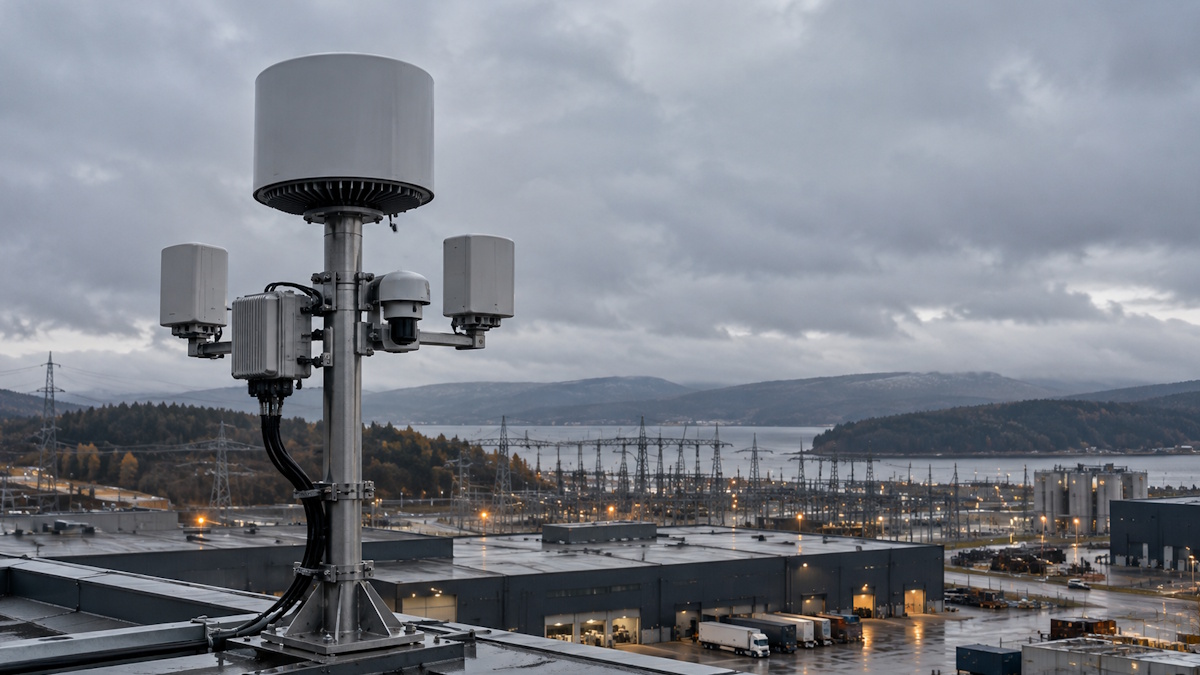
Fixed installation
Permanent installation on rooftops, masts or fence lines. Integrates with existing security systems such as CCTV, access control and the alarm monitoring centre. Optimal for critical infrastructure and sites with an ongoing airspace monitoring requirement.
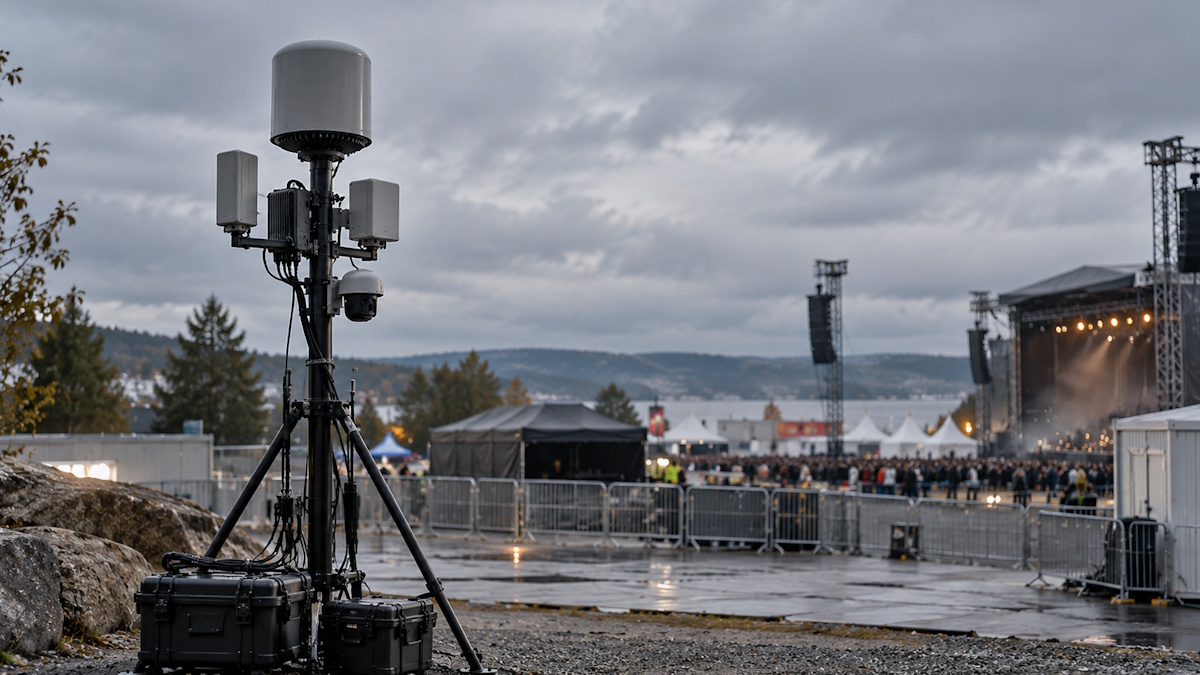
Temporary deployment
Rapidly deployable solution for events, state visits, construction projects or other short-term needs. The system is set up and dismantled without permanent installations. Can be activated within hours.

Mobile (vehicle-mounted)
The system is integrated into a vehicle and follows the operational position. Provides flexible airspace monitoring wherever the need arises – without dependency on fixed infrastructure. Particularly relevant for mobile security operations and convoy protection.
Integration with existing security platforms
The drone detection system is not a standalone solution – it is designed to become a natural part of the customer's existing security infrastructure. The platform ships with an open API and supports integration with leading security management systems, so alarms, event data and tracking footage land directly in the tools the operator already uses.
Genetec Security Center
Native integration with Genetec Security Center enables drone detection events to appear directly in the Genetec operator view. Cameras are triggered automatically, alarms are escalated according to defined rules and events are logged in the Genetec event database.
Milestone XProtect
Integration with Milestone XProtect means detected drones activate PTZ tracking, trigger event rules and appear in MIP SDK-based operator panels. Milestone is one of the most widely deployed VMS platforms in the Norwegian market.
Open API – custom integrations
The platform's open REST API makes it possible to build custom integrations with virtually any system – alarm receiving centres (ARC), PSIM platforms, operations monitoring, mobile notification apps or internal security systems. We assist with the integration work.
Also supports ONVIF-compatible camera systems and can deliver alarms via email, SMS, webhook and a dedicated operator app.
Centralised control – regardless of geographic spread
A drone detection system does not need to be limited to a single facility or a confined area. The system can be deployed across multiple sites – geographically distributed or to achieve deeper coverage across a single large area. Sensors can be positioned independently and communicate back to a central point: the customer's own security operations centre, guard room or operator panel.
Multi-site operations
The same platform monitors assets at different locations – for example several power substations, port terminals or construction sites – from a single operator panel. Events, alarms and tracking data from all locations are consolidated into one unified operating picture.
Extended coverage area
For large sites – such as port areas, industrial parks or events with an extensive perimeter – multiple sensors can be positioned strategically to ensure overlapping coverage without blind spots. The system presents a consolidated airspace status across the entire defined area.
Centralised alarm and notification handling
Alarms and notifications from all sensors and locations are handled at a single point. This may be the customer's own guard room, a security operations centre or an integrated monitoring station. The operator receives immediate notification with drone position, flight path and event log – and can initiate a response directly from the panel.
Scalable architecture
The system grows with the requirement. Start with one location or a limited area – and expand gradually by adding sensors or new sites as needs evolve. No need to start from scratch when scaling up.
Who needs drone detection?
Airspace security is relevant for all organisations and facilities exposed to unauthorised drone activity – for security, operational or regulatory reasons.
Critical infrastructure
Power substations, water supplies, telecommunications and data centres are attractive targets for reconnaissance and sabotage via drone. Airspace monitoring is a natural part of perimeter security for such facilities.
Port facilities and ISPS zones
ISPS-certified ports have strict requirements for securing restricted areas. Drones represent a new and difficult-to-control intrusion vector that requires active management.
Public security authorities
Government bodies and security authorities with specific requirements for the protection of personnel, information and operations need robust airspace monitoring – including neutralisation capability with appropriate regulatory approval.
Major events
Concerts, sporting events, state visits and other large gatherings are exposed to drone activity. Temporarily deployable systems can be activated quickly and secure the airspace over a defined area for the duration of the event.
Frequently asked questions about drone detection
Answers to the most common questions we receive about technology, legality and the process.
Yes, detection and monitoring of airspace is legal. Systems that passively observe, identify and track drones require no special permit beyond normal requirements for CCTV. Active countermeasures – such as electronic neutralisation (jamming/spoofing) and physical intervention – are regulated and require specific approval from the Norwegian Communications Authority (Nkom) and potentially the National Security Authority (NSM). We assist with regulatory liaison and the application process.
No. Neutralisation via electronic countermeasures and active response drones is reserved for operators who can document a specific operational need and who satisfy the regulatory requirements. This typically applies to public security authorities, operators of critical infrastructure and ISPS-certified ports. For most private operators we deliver the detection level, which in itself provides substantially better situational awareness and the ability to initiate manual response measures.
Costs vary considerably depending on coverage area, number of sensors, capability level (detection/neutralisation/response) and whether the solution is fixed, temporary or mobile. Contact us for a needs assessment and price estimate tailored to your site.
Yes. We offer temporarily deployable solutions for events and other short-term needs. The system is set up, configured and activated for the duration of the event – and dismantled afterwards. Contact us early in the planning process to ensure availability.
RF detection (radio frequency analysis) captures the signals between the drone and the controller's radio. It is effective against commercial drones with known radio protocols, but does not work against autonomous drones without an active radio link. Radar-based detection identifies drones through physical movement in the airspace, independently of radio signals – making it more robust. Modern systems combine both technologies for the highest possible detection rate.
Yes. Fixed installations typically integrate with existing security systems – so that a detected drone automatically triggers PTZ camera tracking, alerts the operator panel and logs the event. We ensure that drone detection becomes a natural part of the overall security picture.
Secure the airspace above your facility
Contact us for a no-obligation needs assessment. We evaluate the site, threat environment and regulatory requirements – and recommend the right capability level and configuration.
Get in touchRelated services
Perimeter Security
Protection of outer boundaries with sensors and CCTV.
CCTV
Professional surveillance systems with modern IP cameras, intelligent video anal...
High Security
Custom solutions for high-security objects.
Intruder Alarm
Certified alarm systems with direct connection to monitoring center and 24/7 sur...